
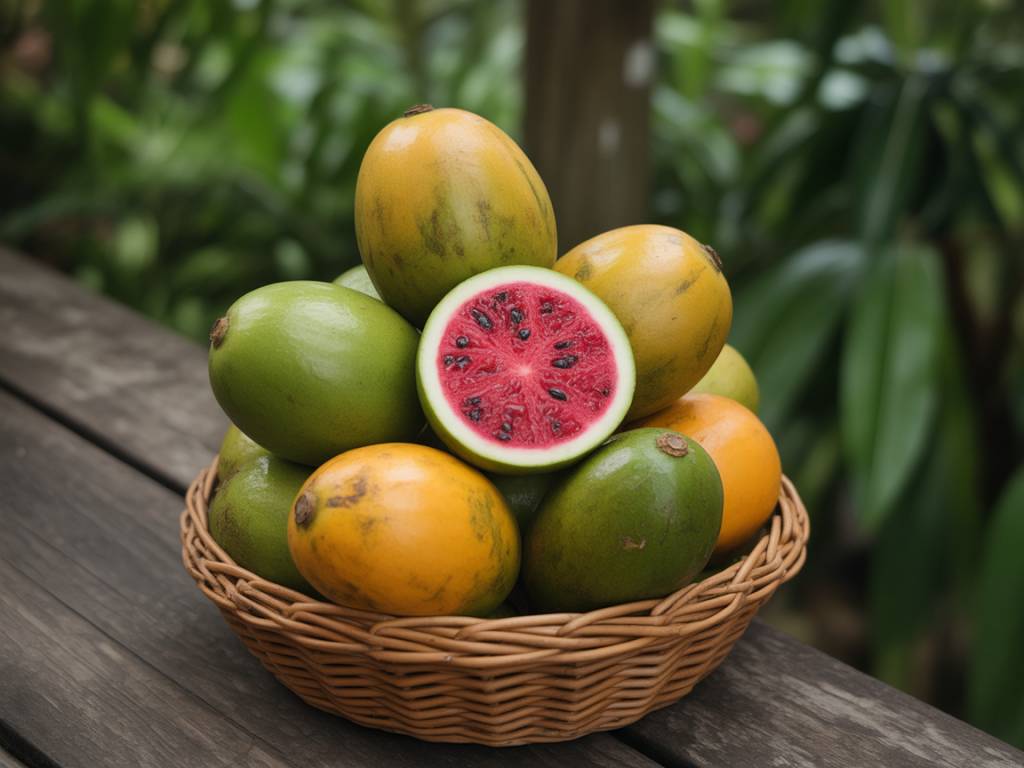
Walk through any local market in Costa Rica and your senses get ambushed immediately — the colors, the smells, the sheer abundance of things you can’t quite name. Most visitors reach for the familiar: mango, pineapple, papaya. But tucked between those crowd-pleasers are fruits that locals have been eating since childhood, fruits that rarely make it onto resort menus or tourist itineraries. If you’re staying near the southern Pacific coast — around Uvita, Dominical, or Ojochal — you’re in particularly fertile territory for this kind of edible discovery. These are the Costa Rican fruits you’ve probably never tried, and exactly where to find them.
Costa Rican Fruits You’ve Probably Never Tried — and Why They Matter
Costa Rica’s extraordinary biodiversity doesn’t stop at its wildlife. The country’s tropical ecosystems produce dozens of fruit varieties that never make it into export markets, supermarket chains, or even most travel guides. Eating them is one of the most direct ways to connect with the culture — these are flavors tied to family recipes, rainy-season rituals, and roadside memories passed down through generations. Here’s your field guide.
Pejibaye — The Savory Surprise of the Palm Tree
Pejibaye, known in English as peach palm fruit, grows in dense clusters on towering palm trees and looks like a tiny, burnt-orange pumpkin. But don’t let the appearance fool you — this fruit behaves more like a starchy vegetable than anything sweet.
- Taste and texture: Earthy, dense, somewhere between chestnut and sweet potato. Boiled and served with butter or a pinch of salt.
- Nutritional profile: Rich in beta-carotene, protein, and complex carbohydrates — it was a dietary staple for Indigenous communities long before Spanish colonization.
- Best pairing: A cup of strong Costa Rican coffee at breakfast.
Where to taste it: The Thursday farmers’ market in San Isidro de El General is your best bet. Vendors sell freshly boiled pejibayes wrapped in banana leaves — the scent alone will lead you there.
Guaba — Nature’s Ice Cream Pod
If you see someone splitting open a pod that looks like an oversized green bean and smiling at what’s inside, they’ve found guaba — also called the ice cream bean. The fluffy white pulp surrounding the seeds dissolves on your tongue with a flavor that is unmistakably reminiscent of vanilla ice cream.
- Season: Late dry season, typically February to April.
- How to eat it: Crack open the pod, pull out the white fluff, and eat it fresh with your fingers. No utensils, no preparation needed.
- Fun fact: Guaba trees are nitrogen-fixers, widely planted in shade-grown coffee and cacao farms across the country.
Where to taste it: Roadside fruit stalls near the bridge over the Río Barú on the road to Dominical. Vendors often sell whole pods by the bag during peak season.
Zapote — A Spoonful of the Tropics
Zapote (also spelled mamey sapote) is the fruit equivalent of a dessert course. Its flesh is a deep terracotta-red, creamy in texture, and layered with flavors of caramel, sweet pumpkin, and a faint note of cherry. It feels almost too rich to be real.
- Texture: Smooth and mousse-like when fully ripe, similar to a ripe avocado in consistency.
- Nutritional value: High in fiber, vitamin C, and potassium.
- Watch out for: The large, glossy seed at the center — it takes up a surprising amount of space inside.
Where to taste it: The central market in San José, specifically Frutería Las Delicias, where vendors slice them open on request. Also occasionally available at produce stands near Palmar Norte during harvest months.
Manzana de Agua — The Cooling Water Apple
Light, crunchy, faintly floral, and blushed pink on the outside — the manzana de agua (water apple) is the opposite of intense. It hydrates as much as it satisfies, making it perfect for hot afternoons along the coast.
- Taste: Mildly sweet with a rose-like fragrance and the crunch of a crisp Asian pear.
- Best eaten: Cold, fresh from the tree, as a beachside snack.
- Origin: Originally from Southeast Asia, it has been naturalised in Costa Rica for centuries and grows abundantly in home gardens.
Where to taste it: Village markets around Montezuma on the southern Nicoya Peninsula. Locals sometimes sell baskets near the central square on slow market days.
Nance — Tiny, Tangy, and Deeply Costa Rican
No list of Costa Rican fruits you’ve probably never tried would be complete without nance. These pea-sized yellow berries are fiercely polarizing — their sharp, tangy aroma and funky, fermented undertones either win you over instantly or send you running.
- Flavor profile: Tangy, slightly cheesy, with a fruity brightness underneath.
- Traditional uses: Fermented into chicha de nance, cooked into empanadas, or preserved in syrup.
- Season: Early rainy season, typically June to August, especially in Guanacaste.
Where to taste it: Traditional sodas (local eateries) around Santa Cruz in Guanacaste serve chicha de nance during harvest season. It’s a folk drink with genuine cultural roots — worth every sip.
Jocote — A Costa Rican Childhood in One Bite
Small, round, and found in red, yellow, and purple varieties, jocotes are ubiquitous during harvest season and beloved by children across the country. They’re eaten in two completely different ways depending on ripeness — and both versions are worth trying.
- Unripe (green): Firm, intensely sour, typically eaten with salt and lime — a sharp, addictive snack.
- Ripe: Soft, sweet, mellow, with a thin skin that slips right off.
- Season: November to January, though some varieties fruit earlier.
Where to taste it: Look for kids selling small bags near Playa Uvita or along school routes during harvest months. At just a few colones a bag, it’s the most affordable flavour experience in the country.
Cas — The Sour Jewel Worth Seeking Out
Cas is a wild cousin of the guava — smaller, greener, and far more acidic. By itself it’s almost too tart to eat raw, but blended into a juice with water and a touch of sugar, it becomes something extraordinary: bright, citrusy, and deeply refreshing in the tropical heat.
- Taste: Punchy, citrus-forward, similar to a cross between lemon and guava.
- Most common form: Fresco de cas — a chilled juice served in sodas across the country.
- Health use: Traditionally consumed for digestive health and as a natural remedy for inflammation.
Where to taste it: Nearly every soda in Costa Rica carries it on hot days. For a particularly memorable glass, try a rustic roadside eatery outside Sierpe — served in a mason jar with ice and fresh mint, it’s the kind of drink that resets your whole afternoon.
How to Make the Most of Your Fruit Hunt in Costa Rica
Tracking down these fruits is part of the experience. A few practical tips to help you taste more and waste less time:
- Go to local markets, not supermarkets. The Feria del Agricultor (farmer’s market) happens in most towns on weekends — this is where the unusual stuff lives.
- Ask vendors how they eat it. Most will show you, slice it open, or hand you a sample. Curiosity is always welcome here.
- Respect the seasons. These fruits aren’t shipped in from elsewhere. If it’s not the season, it’s not available — so when you see something unfamiliar, say yes immediately.
- Travel with an open stomach. The best discoveries happen between meals, at a roadside stand you almost drove past.
In Costa Rica, fruit is never just food. It’s geography, memory, and generosity — all wrapped in something ripe and waiting to be shared. The next strange name you see chalked on a sign or called out by a vendor? That’s the one to try first.