
You wake up before the alarm. Not because of jet lag, but because something deep and resonant is rolling through the canopy — a low, rumbling chorus that sounds like distant thunder filtered through leaves. That’s your first howler monkey serenade, and at Villa Mango in Nosara, Costa Rica, it’s the only wake-up call that matters. Staying here means sharing your mornings, afternoons, and lazy hammock hours with some of the most extraordinary wildlife on the planet. This guide will show you exactly how to spot sloths and monkeys near Villa Mango, when to look, where to go, and how to do it right.
Why Villa Mango is one of the best spots to spot sloths and monkeys in Nosara
Villa Mango sits in the verdant hills above Nosara, surrounded by secondary tropical forest and fruiting trees that act like a natural buffet for local wildlife. Unlike urban resorts surrounded by concrete, the villa’s gardens blend seamlessly into the surrounding jungle. That’s not a design accident — it’s a habitat invitation.
Within a few hundred metres of the property, you’re in the territory of multiple primate troops and a handful of resident sloths. The combination of fruiting trees such as Cecropia and Guanacaste, along with the proximity to the Nosara Biological Reserve, makes this corner of the Nicoya Peninsula genuinely exceptional for spontaneous wildlife encounters. You don’t need a guided tour to experience this — you need good timing and a little patience.
How to spot sloths and monkeys near Villa Mango: know who you’re looking for
Before scanning the treetops, it helps to know exactly which animals you might encounter and what makes each one unique.
Three-toed sloths
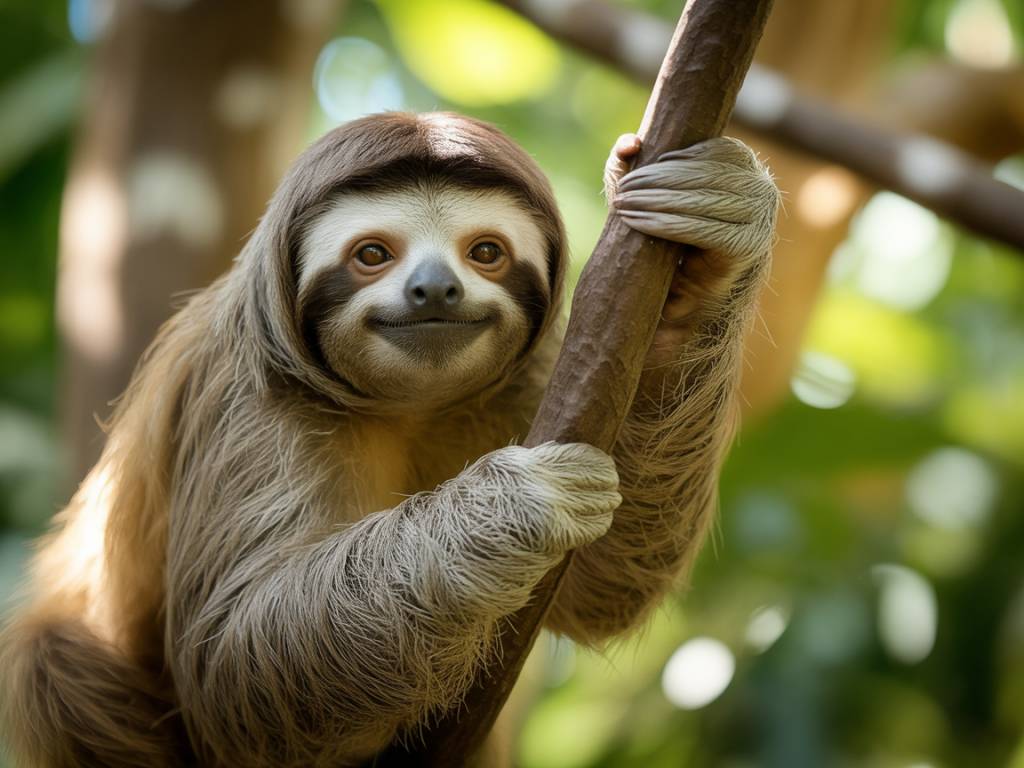
The Bradypus variegatus — or brown-throated three-toed sloth — is the most commonly spotted sloth species around Nosara. They spend up to 20 hours a day resting, which paradoxically makes them harder to find (they barely move) and easier to observe (they stay put once located). Their fur grows algae, giving it a greenish tint that acts as near-perfect camouflage against mossy branches.
Howler monkeys
Alouatta palliata, the mantled howler monkey, is the loudest land animal in the Western Hemisphere. Their calls can carry up to 5 kilometres through dense forest. Troops of 10 to 20 individuals roam defined territories and are highly predictable — if you hear them in a particular tree at dawn, there’s a good chance they’ll return the following morning.
White-faced capuchins
Intelligent, opportunistic, and endlessly entertaining, Cebus capucinus travel in troops of 10 to 20. They are tool users — documented cracking nuts and using sticks to extract insects — and their curious, expressive faces make them a favourite among photographers. They move fast, so be ready.
Best times of day to spot wildlife around Villa Mango
Timing is everything in the jungle. Animal activity follows the sun, and knowing the rhythm dramatically increases your chances of meaningful sightings.
- 5:00–7:30 a.m.: Prime monkey time. Howlers begin calling before sunrise, often around 4:30 a.m. Capuchins become active as soon as light filters through the canopy. Sloths are occasionally on the move between trees during these cooler hours.
- 7:30–11:00 a.m.: Sloths may still be visible basking in early sun to warm their bodies — they are ectothermic and need external heat to digest food. Look for them in exposed, sun-catching branches.
- 3:30–6:00 p.m.: A second burst of monkey activity as temperatures drop. Howlers often call again at dusk, and capuchin troops move to sleeping trees, giving you another window to observe them.
- After rain: Sloths tend to move more freely during and after light rainfall. The mist reduces visibility for predators, and they seem to take advantage of the cover.
Step-by-step guide to spotting sloths in the trees
Finding a sloth requires a fundamental shift in how you look. Forget scanning quickly — sloths reward the slow gaze.
- Target the right trees first. Three-toed sloths show a strong preference for Cecropia trees, identifiable by their tall, slender trunks and large, umbrella-shaped palmate leaves. These trees are abundant around Villa Mango’s garden perimeter.
- Scan from trunk to canopy in vertical strips. Move your eyes slowly upward along each trunk. Look for rounded shapes, unusually symmetrical clusters, or anything that doesn’t quite match the branch structure around it.
- Look for the hook shape. Sloths hang from branches with their curved claws, often appearing as a compact ball or a gentle C-shaped silhouette against the sky.
- Use binoculars systematically. A 8×42 or 10×42 pair is ideal for jungle spotting — wide field of view, good light gathering. Sweep the canopy in overlapping sections rather than random sweeping.
- Once you find one, mark it mentally. Sloths move as little as 38 metres per day. If you locate one in the morning, it may still be in the same tree at sunset.
How to find and observe monkeys without disturbing them
Monkeys are loud, dynamic, and far easier to detect than sloths — but observing them well still requires some technique.
- Listen before you look. Follow the sound of crashing branches, chattering calls, or fruit falling to the ground. Capuchins are especially noisy foragers.
- Position yourself downhill or in a clearing. Looking up into the canopy from below gives you a much cleaner sightline than trying to peer through dense mid-level vegetation.
- Stay still once you’ve found a troop. Monkeys are highly aware of movement. Freeze, lower your profile, and they’ll often continue their natural behaviour within minutes.
- Never feed them. This is non-negotiable. Feeding monkeys disrupts their natural foraging behaviour, creates dependency, and can lead to aggression. Human food is also genuinely harmful to their digestive systems.
- Respect a minimum distance of 5–10 metres. This protects both them and you — capuchins in particular can become defensive if they feel cornered.
Where to go near Villa Mango for the best wildlife encounters
Some of the finest sightings happen without leaving the property, but a short exploration of the surrounding area opens up even more opportunities.
The Villa Mango garden and perimeter trees
The fruiting trees on and immediately around the property draw wildlife in reliably. Check the large trees near the pool terrace in the early morning — this is one of the most consistently productive spots for both sloths and passing monkey troops.
Nosara Biological Reserve
A short drive or bike ride from the villa, this protected reserve covers over 70 hectares of coastal tropical forest. It supports a rich biodiversity that includes all three monkey species present in Costa Rica, resident sloths, iguanas, coatis, and more than 100 recorded bird species. The shaded trails are walkable year-round and are especially productive in the early morning.
Playa Pelada mangroves
The mangrove edges along Playa Pelada at dusk are worth exploring. Howler monkeys sometimes move through the fringe vegetation at golden hour, and the light is spectacular for photography.
Essential gear to bring on your wildlife walks
- Binoculars (8×42 or 10×42): Non-negotiable for sloth spotting and bird identification at canopy height.
- Camera with a telephoto lens (200mm+): Lets you capture sharp images without approaching the animals closely.
- Quiet, closed-toe shoes: Lightweight trail runners work well on the paths near Villa Mango and in the reserve.
- Insect repellent (DEET-free options available): Essential for dawn and dusk outings, especially near water or dense vegetation.
- A wildlife identification app: iNaturalist and Seek are both excellent tools for logging and identifying species in real time, and your observations contribute to scientific databases.
Responsible wildlife watching: the rules that matter
Costa Rica has built much of its global reputation on responsible ecotourism. Visitors to Villa Mango are guests in a living ecosystem, and a few simple principles go a long way.
- No flash photography. Flash disorients nocturnal and crepuscular animals and disrupts sloths’ sensitive eyes. Use natural light or a high-ISO setting instead.
- Stay on established paths. The undergrowth along trails is home to reptiles, insects, and ground-nesting birds that are easily disturbed by off-trail movement.
- Keep voices low. Loud conversation cuts through the ambient sound of the forest and pushes wildlife back into the deeper canopy before you’ve had a chance to observe it.
- Leave no trace. Pack out everything you bring in. Plastic waste, in particular, poses a direct threat to the wildlife you’ve come to see.
At Villa Mango, the jungle isn’t a backdrop — it’s the main event. The sloths don’t perform on cue, and the monkeys won’t wait for you to find your camera. But slow down, pay attention, and the forest reveals itself with extraordinary generosity. Every morning here is an invitation, and every canopy holds a secret worth finding.