
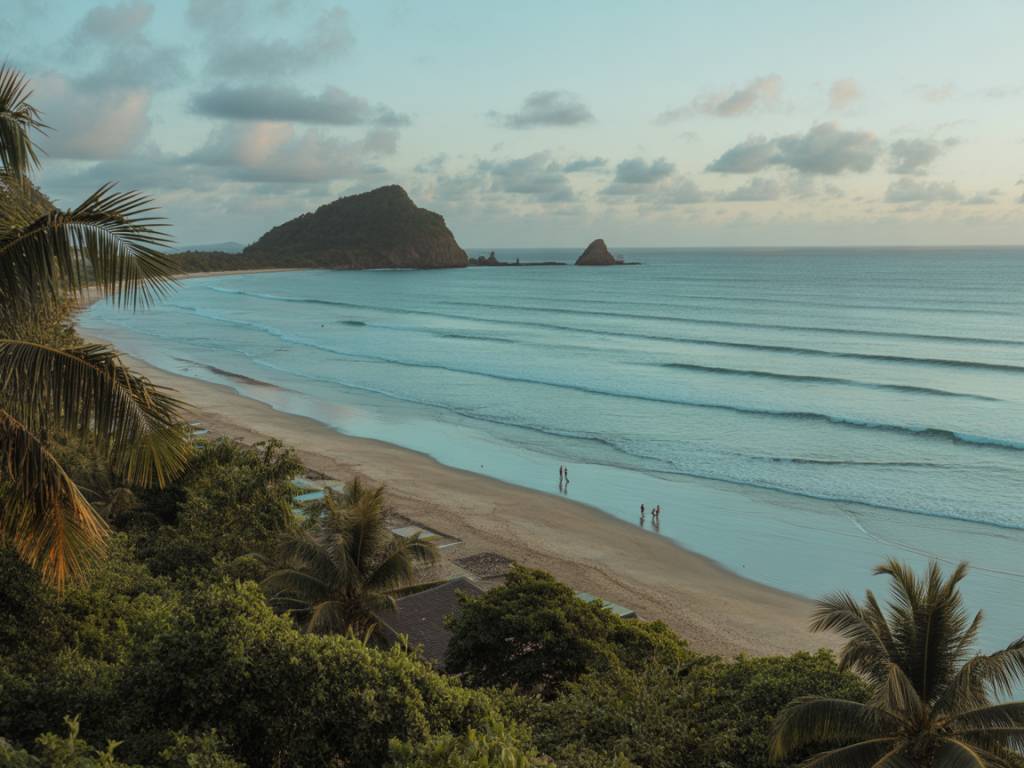
Dominical doesn’t announce itself. There’s no neon sign, no Instagram-famous pier, no curated tourist strip. What you find instead is a stretch of raw Pacific coastline where the jungle tumbles straight into the sea, where surfers wake before dawn, and where the waves dictate the schedule — not the other way around. If you’ve been dreaming of a Costa Rica that still feels like a secret, surf culture and hidden beaches near Dominical are exactly what you can’t miss.
Why Surf Culture and Hidden Beaches Near Dominical You Can’t Miss Are Worth the Journey
Tucked along Costa Rica’s southern Pacific coast, roughly 45 minutes south of Quepos, Dominical sits at the edge of the Ballena Marine National Park corridor — a stretch of coastline that remains one of the least developed in the country. That’s its superpower. Unlike Tamarindo or Jacó, where surf culture has been packaged and polished for mass tourism, Dominical has kept its soul intact.
The surf community here is a mosaic: local Tico families who’ve surfed these breaks for generations, expats who arrived for a week and stayed for a decade, and travelers who stumbled off the coastal highway with a board on the roof and never quite left. What binds them is a shared respect for the ocean — not just as a playground, but as something to be read, understood, and honored.
The region receives consistent swells from the South Pacific year-round, with peak conditions running from May through November (the green season), when powerful overhead waves roll in regularly. The dry season (December–April) delivers cleaner, smaller swells — perfect for beginners or longboarders chasing a smooth, silky ride.
Playa Dominical: The Heartbeat of the Local Surf Scene
The main break at Playa Dominical is the kind of wave that earns its reputation honestly. It’s a fast, punchy beach break with hollow sections that reward surfers who know how to read shifting peaks. The break works best at mid to high tide and handles swells from multiple directions — south, southwest, and northwest all produce rideable conditions at different points along the shore.
This is not a beginner beach. The shore pound is heavy, the current can run strong, and wipeouts come with consequence. But for intermediate to advanced surfers, it’s a daily feast. Early mornings — before 8 a.m. — are the uncrowded golden window. The light is low, the water glassy, and the lineup sparse.
- Best tide: Mid to high for longer rides; low tide exposes more reef and produces the hollow barrels locals love.
- Best swell direction: South to southwest, common June through October.
- Board of choice: Shortboard or fish for the fast sections; a step-up for bigger days.
Along the beachfront, a handful of surf shops rent boards, offer repairs, and double as informal social hubs where forecasts are debated over coffee and yesterday’s sets are replayed with hand gestures. This is Dominical’s living room.
Playa Dominicalito: The Hidden Gem for Beginners and Mellow Sessions
About two kilometers south of the main break, Playa Dominicalito is everything its bigger sibling is not: sheltered, gentle, and forgiving. A small bay framed by headlands softens the incoming swell, producing slower, mushier waves that are ideal for first-timers or surfers who simply want to flow without fighting.
Several well-regarded surf schools operate here, led by certified instructors — many of them lifelong Dominical locals — who combine wave knowledge with genuine patience. A typical two-hour beginner lesson runs between $65–$85 USD and includes board rental, a rash guard, and enough encouragement to get you standing on your first attempt.
Beyond the surf, Dominicalito rewards slow afternoons. The beach is rarely crowded. Pelicans dive. Howler monkeys provide the soundtrack from the tree line. It’s the kind of place where you lose track of time — and don’t mind one bit.
Hidden Beaches Near Dominical You Absolutely Can’t Miss
The coastline surrounding Dominical is threaded with beaches that don’t appear on most maps — or if they do, the road to reach them requires a 4×4, a sense of adventure, and ideally a local tip. These are the stretches worth seeking out.
Playa Matapalo
Drive north from Dominical along the coastal highway and you’ll reach Playa Matapalo — a long, palm-fringed beach with almost no infrastructure and almost no crowds. It’s a longboarder’s dream: slower, rolling waves that let you walk the nose, cross-step, and hang ten without the pressure of a packed lineup. The beach itself is wide and wild, scattered with driftwood and the occasional nesting sea turtle track during season.
Playa Hermosa de Uvita
Not to be confused with the busier Playa Hermosa near Jacó, this Hermosa — about 20 minutes south of Dominical near the town of Uvita — is wide, largely empty, and surfable at multiple breaks along its length. Intermediate surfers enjoy consistent waves here, especially on south swells. After a session, the beach connects to the edge of Marino Ballena National Park, where whale tails of sand emerge at low tide — one of the most photogenic natural formations in all of Costa Rica.
Playa Ventanas
Technically a beach for exploring rather than surfing, Playa Ventanas earns its place on every visit. Named for the two sea caves (« ventanas » means windows) carved through the rocky headland, the beach floods and drains with the tide, creating an otherworldly landscape. At low tide, you can walk through the caves and watch the Pacific frame itself like a painting. It’s best visited on a morning when the surf is too big elsewhere — a perfect backup plan that feels like a reward.
Playa Rey
Less talked about, harder to reach, and all the better for it — Playa Rey sits south of Dominical along a dirt track best navigated by quad or 4×4. The beach is raw and remote, used mainly by local fishermen and the occasional adventurous surfer willing to paddle out alone. Swells hit this coastline with force, making it a spot for experienced surfers only. Bring water, snacks, and no expectations — and you’ll likely have it entirely to yourself.
The Surf Culture Beyond the Waves
What makes surf culture near Dominical genuinely distinctive isn’t just the quality of the waves — it’s the texture of daily life around them. Mornings begin with board waxing at first light. Afternoons drift between yoga classes at open-air shalas, fresh ceviche from a beachside shack, and hammock philosophy sessions that stretch until sunset. Evenings bring live music, craft beer, and the kind of conversations that only happen when people have salt in their hair and no urgent place to be.
The values embedded in this culture — environmental respect, community, simplicity — are reflected in how the town operates. Many businesses here are small, owner-run, and sustainability-focused. Reef-safe sunscreen is not just recommended; it’s expected. Beach cleanups happen organically, organized via WhatsApp groups and word of mouth.
- Surf schools to know: Costa Rica Surf Camp, Dominical Surf Adventures, and several boutique operators at Dominicalito.
- Gear rental: Available throughout the village; expect to pay $15–$25/day for a quality board.
- Surf forecasts: Surfline and Magic Seaweed are both reliable for the Dominical region; locals swear by early-morning sky reading too.
Where to Stay to Live the Full Experience
Proximity to the ocean matters, but so does where you decompress after the session. The Dominical area offers everything from barefoot surf hostels to private eco-villas tucked into the jungle hillside. For travelers who want comfort without sacrificing the wild, intimate character of the region, Villa Mango offers a beautifully positioned retreat — close enough to the coast to hear the ocean, private enough to feel a world apart. Waking up to howler monkeys and stepping onto your terrace with coffee in hand before heading down to the break is, simply put, the right way to do this.
Whether you’re chasing barrels at the main break, learning to stand at Dominicalito, or exploring caves at Playa Ventanas, the surf culture and hidden beaches near Dominical offer something increasingly rare: a coastline that still requires you to show up for it. And in return, it gives you something you’ll spend the rest of the year trying to describe.