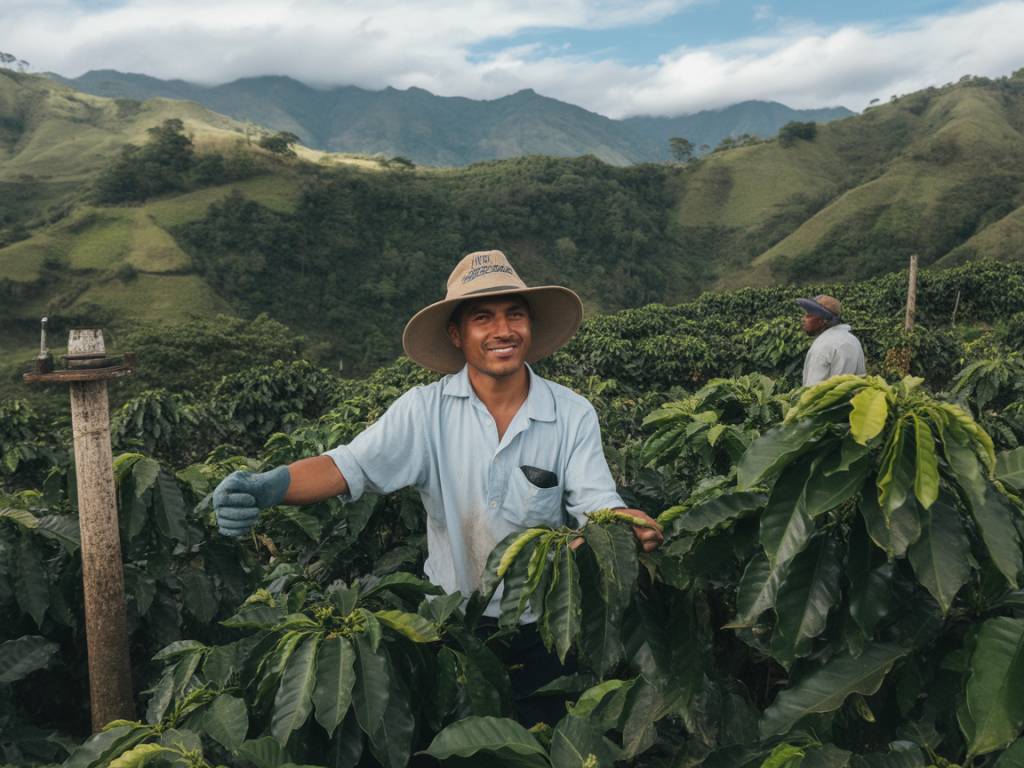
Before the sun clears the ridgeline, before the first tourist van winds up the mountain road, Alejandro is already on his feet. His boots are damp from the grass, his mug of café chorreado still steaming on the wooden railing. This is what a day in the life of a Costa Rican coffee farmer in the hills nearby actually looks like — not a postcard, but a living, breathing rhythm tied to soil, season, and family.
Alejandro is a third-generation coffee farmer in Naranjo, a small town tucked inside the Valle Central at an altitude of roughly 1,600 meters above sea level. His family’s finca spans about four hectares of volcanic hillside — enough to produce some of the finest Arabica beans in the country, and enough to keep three generations busy every single day of the harvest season.
A day in the life of a Costa Rican coffee farmer in the hills nearby starts before dawn
By 5:30 a.m., the campo is alive. Birds — tanagers, clay-colored thrushes, the occasional toucan — announce the light before it fully arrives. Alejandro doesn’t set an alarm. The farm sets it for him.
The morning ritual is quiet but deliberate:
- A cup of freshly brewed coffee made with yesterday’s roast, passed through a traditional chorreador drip sock
- A slow walk through the rows of coffee shrubs to check overnight conditions — moisture, pests, any branches that need attention
- A brief exchange with his father, now in his seventies, who still insists on inspecting the drying beds before breakfast
This quiet hour is not wasted time. It is observation — the core skill of every experienced farmer. « The plant tells you everything, » Alejandro says. « You just have to learn to listen. »
Harvest season: the heartbeat of the finca
Costa Rica’s coffee harvest — la cosecha — runs from November through March, though the exact timing shifts depending on altitude and microclimate. Up in Naranjo’s hills, the cherries tend to peak in December and January, when the air is cool and the light is crisp.
Picking begins at 7:00 a.m. sharp. Alejandro works alongside a small crew of five, including two seasonal pickers who travel up from the lowlands each year. Everyone carries a wicker basket strapped around the waist, and the method is strictly selective hand-picking — only fully ripe, deep-red cherries are taken. No stripping, no shortcuts.
This approach is what separates high-quality Costa Rican coffee from mass-produced alternatives:
- Each picker covers roughly 200 to 400 trees per day
- A skilled picker harvests between 50 and 100 kilos of coffee cherry in a single day
- Those 100 kilos will yield approximately 20 kilos of exportable green coffee
- A single coffee tree produces only about 2 to 3 kilos of cherries per harvest season
The work is physical, repetitive, and deeply meditative. Between the rows, conversations drift in Spanish — stories about family, the rains last week, the price offered by the local cooperative. A sloth hangs from a Cecropia tree at the plantation’s edge. Nobody bothers it. It’s part of the ecosystem, and the ecosystem is part of the coffee.
From cherry to bean: the wet milling process
By early afternoon, the baskets are full and the real science begins. Alejandro leads the way to the wet mill — a compact concrete structure where the transformation from fruit to coffee bean takes place.
Pulping and fermentation
The outer skin of the cherry is removed by a mechanical pulper, revealing two pale seeds still coated in a layer of sticky, sweet mucilage. These seeds are then transferred to fermentation tanks, where they soak for 12 to 36 hours depending on temperature and desired flavor profile.
« Fermentation is where the character of the cup is born, » Alejandro explains. « Too short and the bean tastes flat. Too long and it turns sour. You learn to judge it by feel and smell, not just by a clock. »
Washing and drying
After fermentation, the beans are thoroughly washed with clean water — a step that removes all remaining mucilage — and then spread onto raised drying beds or large concrete patios to dry under the sun. This stage can take 10 to 20 days.
Every day, the beans must be turned by hand multiple times to ensure even drying and prevent mold. It is slow, careful, essential work. The final moisture content must reach approximately 11% before the beans are stable enough for storage and export.
Lunch, land, and the people who hold it together
No working day on a Costa Rican coffee farm skips the midday meal. Under the shade of a mango tree or inside the family kitchen with its low clay-tile roof, Alejandro’s wife Marta sets out a spread that grounds everyone to the land they work.
Typical lunch includes gallo pinto, fresh avocado with lime, plátanos fritos, and occasionally tamales wrapped in banana leaves from the garden. Everything is grown or sourced nearby. The meal is as much ritual as it is nutrition — a moment to exhale, to belong.
When asked what coffee means to the family, Marta doesn’t hesitate: « It means tomorrow. It always has. »
Sustainable farming practices passed down through generations
Long before « organic » became a label worth printing on packaging, Costa Rican highland farmers were practicing what the land taught them. On Alejandro’s finca, sustainability is not a marketing strategy — it is inheritance.
- No synthetic pesticides — natural deterrents like garlic-infused water and companion planting keep pests in balance
- Shade-grown coffee — native and fruit trees are interspersed throughout the plantation, reducing heat stress on plants and providing habitat for over 40 bird species recorded on the property
- Water recycling — processing wastewater is filtered and redirected to irrigate garden plots
- Composting — coffee pulp, the byproduct of milling, is composted and returned to the soil as fertilizer
- Reforestation — sections of the hillside have been replanted with native species to protect the watershed and prevent erosion
« If you take care of the land, it takes care of your children, » Alejandro says. It sounds simple. But it requires the kind of discipline that spans decades, not quarterly reports.
The evening roast: where the day finds its flavor
As the afternoon gold turns amber and the mountains cool, Alejandro prepares the day’s final act: the roast. Using a small hand-cranked drum roaster positioned near the kitchen, he works through batches of dried beans, coaxing out flavors that took months to develop in the soil.
Roast profiles from his farm typically include:
- Light roast — bright, with notes of citrus, jasmine, and green apple
- Medium roast — balanced, with cocoa, almond, and a honey-like sweetness
- Dark roast — earthy and robust, carrying the volcanic mineral character of the soil
He judges doneness by sound, color, and smell — the first crack, the shift in aroma from grassy to caramel, the moment the beans reach their peak without tipping into bitterness. No app, no probe thermometer. Just decades of accumulated attention.
Two cups are ground and brewed before the stars appear. The first sip is quiet, complex, and honest. Alejandro watches you drink it. He doesn’t ask what you taste. He already knows.
What stays with you long after the cup is empty
Spending a full day with a Costa Rican coffee farmer in the hills nearby Villa Mango is not an agritourism checkbox — it is a recalibration. It slows the pace, sharpens the senses, and makes the abstract deeply personal.
Every cup of coffee you drink is the result of roughly 18 months of work — from flowering to harvest to your mug. Behind it are hands like Alejandro’s: calloused, precise, and quiet. Farmers who wake before the birds, who read the weather in the color of a leaf, who measure success not in quarterly growth but in the health of next year’s crop.
The hills of Costa Rica’s Valle Central are just a short drive from Villa Mango. If you ever get the chance to spend a morning among the coffee shrubs — basket in hand, dew still on the ground — take it. You’ll never drink your morning cup the same way again.