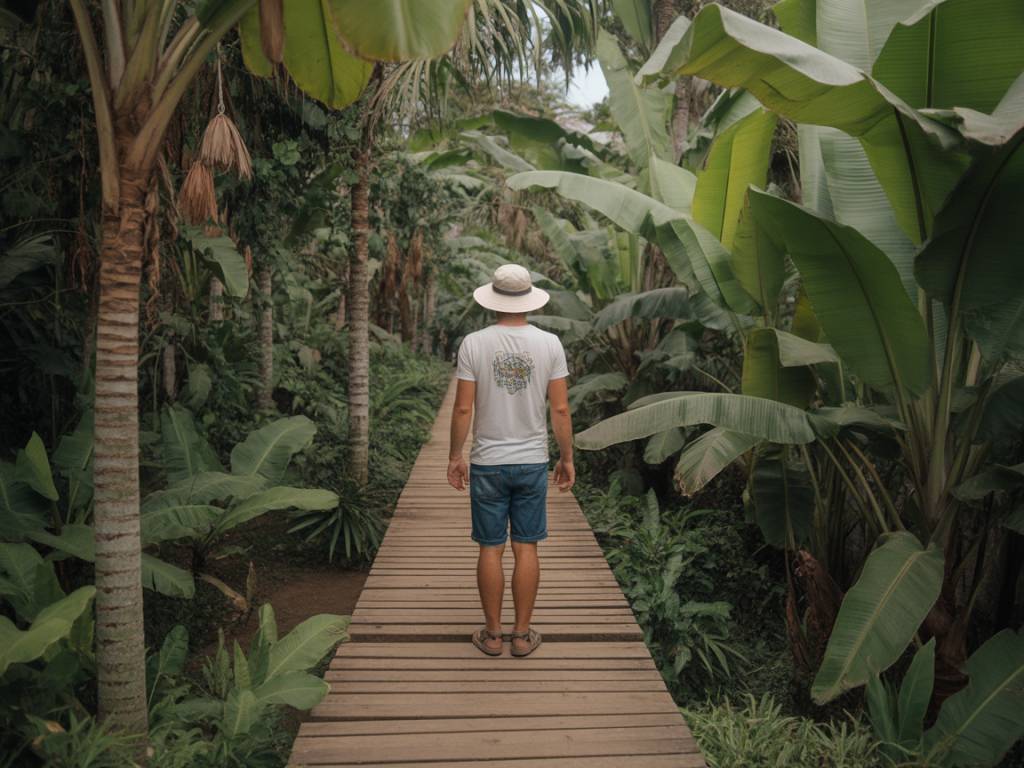
Costa Rica dazzles with its volcanoes, cloud forests, and sun-soaked Pacific beaches — but its greatest treasure isn’t found on any postcard. It’s the warmth of the people who call this country home. Knowing how to support local communities during your visit to Costa Rica transforms a holiday into something far more meaningful: a genuine exchange that benefits both traveler and host, long after the flight home.
Here’s how to make every colón you spend, every tour you book, and every meal you eat count for the communities that make Costa Rica extraordinary.
How to Support Local Communities During Your Visit to Costa Rica: Start with Where You Sleep
Accommodation is where the biggest chunk of any travel budget goes — and it’s one of the most powerful levers you have. Choosing locally owned guesthouses, fincas, or boutique lodges over international hotel chains keeps money circulating within the community rather than flowing out of the country.
Properties like Villa Mango on the Pacific coast exemplify this model: they employ local staff, source food from nearby farms, and are deeply embedded in the rhythms of their neighborhoods. The benefits are tangible:
- Wages stay in the community, supporting entire families.
- Local food suppliers and farmers gain consistent income.
- Cultural knowledge — recipes, stories, traditions — is passed on naturally.
Ask your host about their sourcing practices. The answers will tell you everything about how seriously a property takes its role in the local economy.
Eat at Sodas, Not Chains
Costa Rica’s beloved sodas — small, family-run eateries — are cultural institutions. A plate of gallo pinto with eggs and fresh tortillas at a roadside soda might cost around 3,000 colones (roughly $6), and virtually every cent benefits a local family directly.
Compare that to an international fast-food chain, where profits are repatriated abroad, and the choice becomes obvious. Beyond the economics, sodas simply taste better: ingredients are fresher, recipes are time-honored, and the experience of sharing a table with locals is priceless.
When exploring, look for handwritten menus on chalkboards, plastic chairs under corrugated roofs, and the irresistible smell of something slow-cooked. That’s your signal to stop and eat.
Shop Artisanal and Buy Directly from Makers
Souvenirs matter — not as trinkets, but as acts of economic solidarity. Costa Rica has a rich artisan tradition, and buying directly from makers ensures the full value of your purchase reaches the right hands.
Two communities worth seeking out specifically:
- Guaitil, Guanacaste: Home to Chorotega potters who have practiced pre-Columbian ceramic techniques for generations. Purchasing a piece here directly funds cultural preservation.
- Boruca, Puntarenas: Renowned for its elaborately painted balsa wood masks, crafted by Boruca Indigenous artisans. Each mask tells a story rooted in ancestral mythology.
Avoid mass-produced imports sold at airport duty-free shops. Before buying, ask: Who made this? Where? If the seller can’t answer, move on.
Choose Community-Based Tours and Local Guides
Tourism is Costa Rica’s largest source of foreign income, generating over $4 billion annually — but not all of that flows equitably. Opting for community-based tourism (CBT) initiatives ensures that revenue reaches the people who live closest to the natural and cultural attractions you’re visiting.
What to look for when booking tours:
- Guides who are from the region — they carry generational knowledge no guidebook can replicate.
- Operators certified by the Instituto Costarricense de Turismo (ICT) or recognized by the Certificación para la Sostenibilidad Turística (CST) program.
- Indigenous-led experiences, such as medicinal plant walks, traditional cooking workshops, or oral history sessions.
In the Osa Peninsula, several CBT projects employ former hunters turned conservation guides — a remarkable example of communities reinventing themselves around sustainable tourism. In the Bribri territories of the Caribbean slope, river tours and cacao ceremonies offer authentic windows into Indigenous life.
Support Local Conservation Efforts
Many of Costa Rica’s most important ecosystems are protected not by government agencies alone, but by local communities who depend on them. Supporting these grassroots conservation initiatives is one of the most direct ways to give back.
Practical ways to contribute:
- Visit community-run wildlife rescue centers — your entrance fee funds rehabilitation and release programs.
- Participate in or donate to sea turtle protection projects, such as the long-running program in Playa Ostional, where local residents have patrolled nesting beaches for over 30 years to protect olive ridley turtles.
- Support reforestation cooperatives by purchasing products (honey, coffee, cacao) from farms that maintain wildlife corridors on their land.
Even a small donation to a local turtle tagging project or a forest reserve cooperative creates outsized impact in communities where operating budgets are measured in hundreds, not millions, of dollars.
Slow Down and Stay Longer in One Place
The « checklist » approach to travel — racing from Arenal to Monteverde to Manuel Antonio in five days — spreads tourism spending thinly and prevents any real connection from forming. Slow travel is both more sustainable and more rewarding.
When you stay in one region for a week or more, you:
- Contribute more meaningfully to a single local economy.
- Reduce your carbon footprint by cutting down on inter-regional transport.
- Build real relationships — with your host family, the soda owner down the road, the farmer at the Saturday market.
You also discover things no itinerary lists: the neighbor’s impromptu bonfire, the dawn chorus from a ceiba tree, the conversation over coffee that changes how you see the world.
Engage Respectfully with Local Culture
Genuine respect is the foundation of responsible community tourism. This means approaching interactions with curiosity rather than entitlement, and participation rather than passive observation.
A few guiding principles:
- Ask before photographing people, especially in Indigenous and rural communities.
- Learn basic Spanish phrases — Buenos días, Con permiso, Gracias — even imperfect attempts signal sincere respect.
- Tip generously and fairly. In Costa Rica, tipping at sodas and with local guides makes a significant difference to household incomes.
- Leave honest, detailed online reviews for small businesses. A five-star review on Google Maps can be the difference between a family business thriving or struggling through a slow season.
The spirit of Pura Vida isn’t just a slogan — it’s an invitation to show up fully, generously, and with an open heart. When you travel that way, the communities you visit don’t just benefit economically. They feel seen, valued, and proud of what they have to share.
Costa Rica gives generously to every visitor who walks its trails and swims its waters. Traveling with intention — sleeping locally, eating locally, buying locally, and connecting genuinely — is how you give something lasting back.